


Little Panda: Princess Makeup
BabyBus
Little Panda: Princess Makeup is the kind of educational game I would hand to a young child who enjoys colorful dress-up activities but still needs something simple enough to understand without constant help. I played it as a short, relaxed makeup-and-preparation experience rather than as a demanding game, and that distinction matters. Its appeal comes from letting children turn a princess into a party-ready character through playful visual choices, not from deep strategy, complex rules, or a long story.
Developed by BabyBus, it is free to start and aimed at Everyone. The game belongs to the educational category, although its learning value is informal: children practice recognizing colors, matching visual elements, following a sequence, and making choices. The central idea is easy to grasp immediately: prepare the princess for a party by working through her appearance. That clear objective gives a child an early sense of purpose without requiring reading skill or an explanation from an adult.
In my experience, the best way to judge this game is to ask whether its small goals, visual progress, and gentle pace are enough to keep a child interested. It is not trying to replace a structured lesson, and it should not be treated as one. Instead, it works as a guided creative activity for brief play sessions, especially when a child wants to feel in control of the final look.
How the makeup journey builds momentum
The first goals are clear enough for independent play
The opening appeal is that the child does not have to invent a complicated plan. There is a princess who needs to be prepared, and each interaction points toward that outcome. That makes the first few minutes approachable for children who may become frustrated by games that begin with several menus, instructions, or competing objectives.
I found the goal structure more useful for younger players than a free-form beauty editor would be. A completely open editor can be creative, but it can also leave a child wondering what to do next. Here, the party provides a reason for the activity. The child can make choices while still moving toward a recognizable result: a princess who looks ready for the event.
Related News

Why WhatsApp Messenger Still Makes Everyday Communication Feel Easy

Jurassic World: The Game Is the Better Dino Tycoon for Strategic Players

Threads in Real Life: Who Should Join, Lurk, or Leave

How SHEIN Turned Shopping Into an Endless Content Feed

How to Make Fortnite Feel Smarter on Mobile

Should You Switch to Microsoft Outlook on Mobile?
That structure also creates a natural routine. A child can begin by deciding what kind of appearance suits the character, continue through the preparation, and then enjoy the finished presentation. Even when the individual actions are simple, the sequence gives the session a beginning, middle, and end. I would use it as a short after-school activity or as a calm option before bedtime, provided the child is not expected to play for a long stretch.
One useful tip is to let the child explain the choices aloud instead of making every decision for them. Asking why a particular color or style was selected turns a tap-based activity into a small conversation about matching, preference, and order. That is where the educational side becomes more meaningful than simply watching the screen.
Visible progress comes from the changing character
The strongest progress signal is visual. As the princess is prepared, the child can see that earlier choices have changed her appearance. This is more immediate than a number or a complicated achievement screen because the result is visible on the character itself. For a young player, that before-and-after contrast can be enough to communicate, “I completed something.”
Gallery
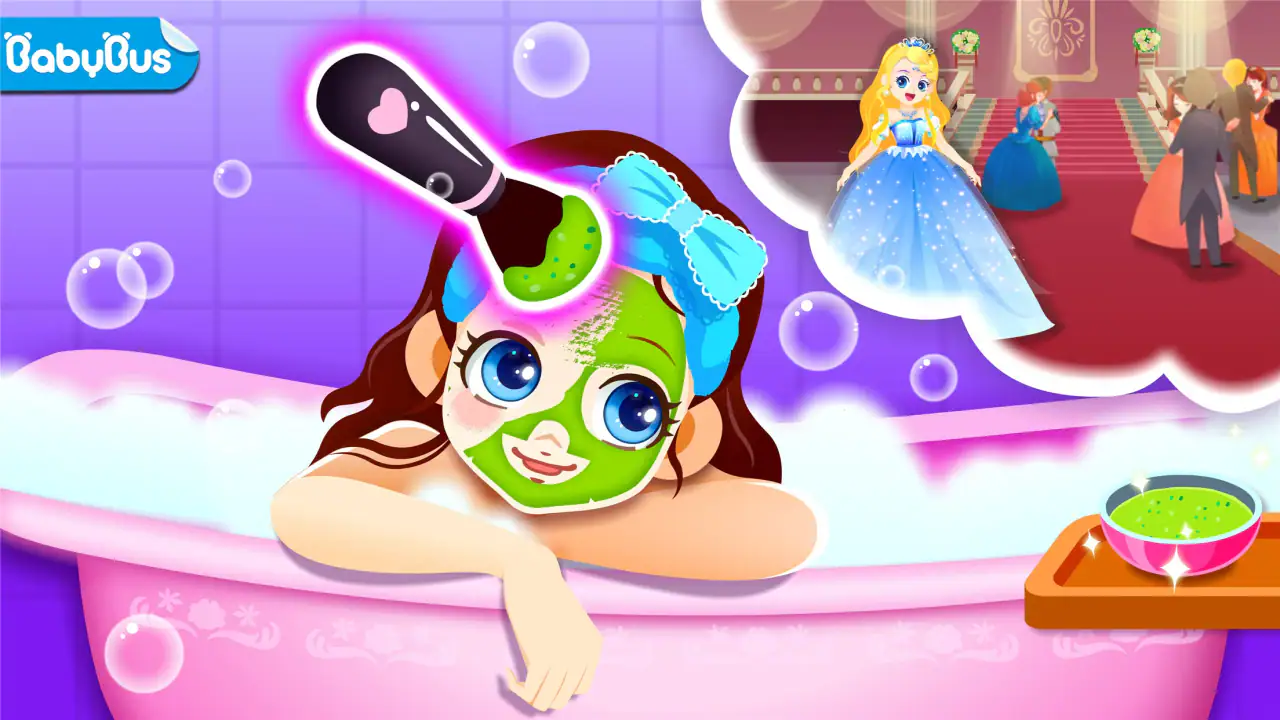
I also like that the final look gives the child a concrete reason to finish the sequence. The reward is not necessarily a competitive score; it is the completed character and the satisfaction of seeing the preparation come together. That makes the game suitable for children who are motivated by creative results rather than winning against an opponent.
Parents should keep expectations realistic, though. A visual makeover is a progress signal, not a deep progression system. Children who want new worlds, increasingly elaborate challenges, or a strong collection mechanic may find the experience limited. The sense of advancement is tied closely to completing the current preparation, so its appeal depends on how much the child enjoys repeating this type of activity.
For younger children, I would encourage them to pause at the end and describe the finished look. This helps them notice cause and effect: a selection was made, the character changed, and the overall appearance now feels different. It is a small interaction, but it makes the game less passive and helps the child connect individual choices with the completed result.
The difficulty curve stays gentle, by design
Little Panda: Princess Makeup is not a game I would choose for a child who wants rising difficulty in the usual sense. I did not approach it expecting timed stages, difficult puzzles, or increasingly strict conditions. Its challenge is mainly about choosing and completing the preparation rather than overcoming failure. That gentle curve is a strength for beginners, but it also defines the limits of the experience.
The low-pressure design means a child can concentrate on the visual task without worrying about losing a life or being punished for an imperfect decision. This is particularly helpful for children who are still learning how to use touch controls or who dislike games that make mistakes feel dramatic. An adult can introduce the activity with very little explanation, then step back while the child explores.
The trade-off is that experienced young players may move through the main activity quickly. If a child already understands dress-up games and expects each attempt to demand more skill, the lack of a noticeable difficulty climb may reduce interest. In that situation, the game works better as a creative break than as a primary game for daily, extended play.
I would also avoid turning the activity into a test with a “correct” beauty choice. The value is in making selections and completing the preparation, not in imposing an adult standard on the result. If a child chooses combinations that seem unusual, that is part of the creative interaction. The game’s accessible structure is more useful when it supports confidence rather than correction.
Unlocks and pacing need a closer look
Progression in this type of game is easy to misunderstand. The promise of preparing a princess for a party creates forward motion, but that does not automatically mean the game offers a large, layered reward system. From my perspective, the main pacing comes from moving through the available preparation steps and seeing the character develop, not from a demanding campaign.
That pacing is appropriate for short sessions. A child can complete a small objective without needing to remember a complicated storyline or return after a long break to understand what is happening. It also makes the game convenient for shared play: an adult can sit beside the child, discuss a choice, and finish a session without committing to a lengthy level.
However, families should pay attention to how the child responds to repetition. If the child enjoys making a new visual decision each time, the simple loop may remain pleasant. If the child is motivated mainly by unlocking a steady stream of new challenges, the pacing may feel too light. I would not install this expecting the same long-term progression found in puzzle adventures, construction games, or more elaborate life simulations.
The free entry point makes it easy to test that fit. The game is free, while optional in-app purchases range from forty-nine cents to three dollars and ninety-nine cents per item. I recommend that parents review purchase controls before handing over the device, especially because a child may naturally interpret visible extras as part of the play path. The safest approach is to decide in advance whether optional items are allowed and keep the purchase decision with the adult.
Retention comes from charm, not pressure
The game’s ability to hold attention depends mainly on the appeal of the princess, the makeup theme, and the pleasure of making visible changes. It does not need aggressive competition to attract a child for a short session. That is a positive difference from games that rely on constant rewards, countdowns, or difficult obstacles to keep players engaged.
At the same time, gentle retention can become limited retention. Once the child understands the basic rhythm, the surprise may fade unless the visual choices continue to feel interesting. I see this as a game that can be revisited when a child is in the mood for dress-up play, rather than one that should be expected to command attention every day.
A realistic everyday use case would be a ten-minute waiting period while dinner is being prepared or while traveling. The child can work toward the party-ready result, and a parent can ask them to talk through the look afterward. I would not use it as a substitute for conversation, outdoor play, or a broader learning activity, but it can fill a small gap without demanding advanced reading or gaming knowledge.
Another practical approach is to play together occasionally rather than leaving the game permanently available as background entertainment. Taking turns choosing elements gives the child a chance to explain preferences and gives the adult a better sense of whether the activity is still engaging. It also prevents the makeup loop from becoming mindless tapping.
Who will enjoy it, and who should skip it?
I think this game is a good match for young children who like princess themes, visual customization, and simple touch interactions. It is especially suitable for a first introduction to this kind of educational game because the objective is easy to understand and the consequences of a choice are visually obvious. Children who enjoy telling stories about characters may also use the finished princess as a starting point for imaginative play away from the screen.
It is less suitable for children looking for serious learning content, advanced problem solving, or a strong sense of mastery. The educational label should be understood in a broad, activity-based way rather than as a substitute for phonics, mathematics, science, or a curriculum-focused app. If the main goal is measurable academic practice, I would choose a dedicated learning tool instead.
I would also skip it for older players who want strategic decisions, competitive play, or a substantial challenge curve. The game’s simplicity is intentional, so asking it to provide complex progression would be unfair. Its best audience is the child who values making a character look different and completing a friendly sequence, not the player who needs increasingly difficult goals to stay interested.
Practical details parents should know
The game has a 3.8 average from around 161 thousand ratings, and it has passed 100 million installs. Those figures suggest that the Little Panda format has reached a very large audience, but they should not replace a personal test with the specific child who will use it. A popular children’s game can still be a poor fit for a child who dislikes dress-up themes or quickly outgrows gentle activities.
It was released on July 24, 2019, and the current version is 8.75.13.00. It requires Android 6.0 or later. I would check the device before planning to install it, particularly if the child uses an older tablet kept for casual games. Compatibility is a simple detail, but it is frustrating to discover it only after promising a new activity.
The Everyone content rating makes the game broadly approachable for families, while parental supervision remains sensible because the audience is young and optional purchases are present. I would let an adult handle installation and account settings, then observe the first session. That gives the parent a chance to see how the child understands the controls and whether the pace feels satisfying.
My progression verdict
After looking at the goals, progress signals, challenge, and pacing together, I see Little Panda: Princess Makeup as a compact creative activity rather than a deep progression game. Its early goal is strong because it is concrete, its visual progress is easy for a child to understand, and its difficulty curve avoids unnecessary frustration. Those qualities make it welcoming.
The weaker side is long-term variety. The game does not seem designed to provide the layered challenge or sustained unlock chase that keeps older children invested for extended sessions. Its retention pressure is intentionally mild, which I consider healthier than constant urgency, but it also means the child’s interest depends heavily on enjoying the central makeover routine.
My honest recommendation is to treat it as a short, supervised creative break, not as an all-purpose educational curriculum or an endlessly replayable adventure. If a child likes princess makeovers, the clear party goal and visible transformation should provide enough satisfaction for occasional play. If the child needs academic practice, complex puzzles, or a stronger reward structure, another category of game will be a better choice.
For the right player, the simplicity is exactly the point. I would install it for a young child who wants to make choices, see an immediate result, and finish with a character they helped prepare. I would keep sessions flexible, discuss the choices rather than correcting them, and make sure optional purchases remain an adult decision. Used that way, BabyBus’s game offers a friendly introduction to creative digital play without pretending to be more demanding than it really is.
FAQs for Little Panda: Princess Makeup
What is Little Panda: Princess Makeup?
Little Panda: Princess Makeup is a fun and interactive app designed for children, allowing them to explore creativity with makeup and fashion. Players can dress up the little panda as a princess, experimenting with various makeup styles, outfits, and accessories. The app offers a colorful, engaging experience aimed at enhancing creativity and imagination.
Is Little Panda: Princess Makeup safe for children?
Yes, Little Panda: Princess Makeup is designed with children’s safety in mind. The app contains age-appropriate content, focusing on creativity and fun. It doesn’t include any in-app purchases or ads that could lead to accidental spending, making it a secure choice for young users.
What devices support Little Panda: Princess Makeup?
Little Panda: Princess Makeup is available for both Android and iOS devices. It runs smoothly on most modern smartphones and tablets. Ensure your device's operating system is up to date to enjoy the best performance and features. Check the app store for specific system requirements.
Are there educational benefits to Little Panda: Princess Makeup?
Yes, the app offers educational benefits by promoting creativity, decision-making skills, and color recognition. It encourages children to explore different styles and express themselves through design. While primarily entertaining, it subtly helps in developing fine motor skills and artistic sensibility.
Is Little Panda: Princess Makeup free to download?
Little Panda: Princess Makeup is free to download on both Android and iOS platforms. While the core features are available for free, some additional content or features might require a purchase. Check the app store for any updates on pricing and available in-app purchases.
Pros
- Engaging graphics for children.
- Easy-to-use interface.
- Variety of makeup options.
- Promotes creativity and imagination.
- Ad-free experience for uninterrupted play.
Cons
- Limited to princess-themed content.
- No multiplayer options.
- In-app purchases can add up.
- Requires internet for updates.
- May not appeal to older kids.


